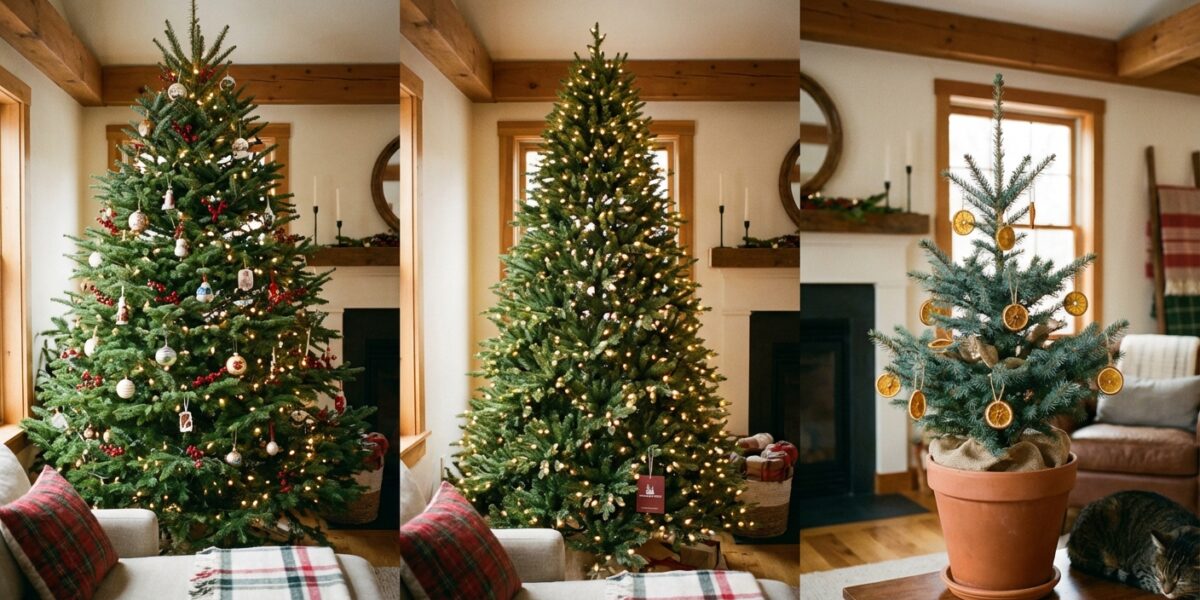
Choosing the right Christmas tree is one of the most important decisions of the holiday season. It’s the centerpiece of your home, the backdrop for presents, and the thing your family gathers around for photos, cocoa, and memories. But with so many options in 2026 — real, artificial, and even potted living trees — how do you pick the right one?
This guide breaks down every major christmas tree type so you can make the best choice for your space, your budget, and your lifestyle.
Real Christmas Trees: The Classic Choice
Nothing beats the smell of a freshly cut tree filling your living room. Real trees have been the gold standard for centuries, and for good reason. Here are the most popular species you’ll find at tree farms and lots in 2026:
Fraser Fir
The king of Christmas trees. Fraser Firs have strong branches that hold heavy ornaments, excellent needle retention, and that iconic Christmas pine scent. They’re slightly more expensive — typically $80 to $120 for a 7-footer — but they’re worth every penny. If you only buy one real tree, make it a Fraser.
Noble Fir
Noble Firs are prized for their symmetrical shape and sturdy, well-spaced branches. They’re excellent for homes with lots of ornaments because there’s room between branches to hang everything without crowding. Expect to pay $70 to $100.
Douglas Fir
The most widely available tree in the United States. Douglas Firs have soft, dark green needles and a sweet fragrance. They’re more affordable — usually $50 to $80 — but their branches aren’t as strong as Fraser or Noble, so skip the heavy glass ornaments.
Balsam Fir
If scent is your top priority, Balsam Fir is your tree. It produces the strongest, most traditional Christmas fragrance. The downside? Needle retention isn’t as good as Fraser Fir, so keep it well-watered and plan to put it up no more than 2-3 weeks before Christmas.
Pros of Real Trees
- Authentic scent that no candle or spray can replicate
- Biodegradable — can be mulched or composted after the season
- Supports local tree farms and growers
- Each tree is unique — no two look exactly the same
Cons of Real Trees
- Requires regular watering (a gallon per day for a large tree)
- Needle drop creates ongoing cleanup
- Fire risk if it dries out
- Annual purchase cost adds up over the years
Artificial Christmas Trees: The Practical Pick
Artificial trees have come a long way. The best ones in 2026 are virtually indistinguishable from real trees — with realistic “PE” (polyethylene) molded branch tips mixed with traditional PVC. Here’s what’s available:
Pre-Lit Trees
The most popular artificial option. Pre-lit trees come with LED lights already woven into the branches, saving you hours of untangling and stringing. Higher-end models have 700+ lights with multiple color modes. Expect to pay $200 to $500 for a quality 7.5-foot pre-lit tree that’ll last 10+ years.
Fiber Optic Trees
Fiber optic trees have tiny light strands built into the branch tips that cycle through colors. They’re eye-catching and great for kids’ rooms, apartments, or secondary tree locations. Most range from $50 to $150.
Pencil Trees
Slim and space-efficient, pencil trees are designed for apartments, narrow hallways, or homes where floor space is limited. They’re typically 6-7 feet tall but only 18-24 inches wide. Perfect for small living rooms that still want a full-height tree without the footprint.
Pros of Artificial Trees
- One-time purchase lasts 10-20 years
- Zero maintenance — no watering, no needles
- Pre-lit options eliminate the hassle of stringing lights
- Hypoallergenic — no sap, pollen, or mold
- Fire-resistant (most are flame-retardant rated)
Cons of Artificial Trees
- No natural scent
- Storage requires space (typically a large box in the garage or attic)
- Made from plastic — not biodegradable
- Higher upfront cost
Potted Living Christmas Trees: The Eco Option
Potted trees are a growing trend (literally). Instead of cutting a tree down, you buy one with its root ball intact in a container. After Christmas, you can plant it in your yard or keep it on your patio year-round.
Popular potted species include Blue Spruce, Alberta Spruce, and Rosemary trees (for small spaces). Prices range from $30 for a tabletop rosemary to $150+ for a 5-foot potted spruce.
Pros of Potted Trees
- Most sustainable option — the tree keeps living and growing
- Can be replanted in your yard to create lasting memories
- Real tree scent (though milder than a freshly cut tree)
- Great teaching moment for kids about sustainability
Cons of Potted Trees
- Heavy — a 5-foot potted tree can weigh 50+ pounds
- Can only stay indoors for 7-10 days before the warmth stresses the tree
- Limited size options compared to cut or artificial
- Needs to be transitioned gradually between indoor and outdoor temperatures
Cost Comparison Over 10 Years
Let’s look at the math for a decade of Christmas trees:
- Real tree: $80/year × 10 = $800
- Artificial tree: $350 one-time = $350 (or $35/year)
- Potted tree: $100 one-time + replanting = $100 (if it survives the replant)
From a pure dollar perspective, artificial wins handily. But factor in the experience, the scent, and the tradition of going to a tree farm with your family — and real trees offer something money can’t buy.
Environmental Impact
This is where it gets interesting. A common misconception is that artificial trees are worse for the environment. The reality is nuanced:
- Real trees are carbon-neutral when composted. Tree farms plant 1-3 new seedlings for every tree harvested. They absorb CO2 while growing.
- Artificial trees have a larger carbon footprint from manufacturing and shipping (most are made in China). You need to reuse an artificial tree for at least 6-8 years to offset its environmental cost.
- Potted trees are the greenest option if successfully replanted — they continue absorbing carbon for decades.
Which Tree Is Right for You?
Here’s a quick decision helper:
- Choose a real tree if: You love the tradition, the scent, and going to a tree farm is part of your holiday experience
- Choose artificial if: You want convenience, have allergies, or want to invest once and forget about it for a decade
- Choose potted if: You’re environmentally conscious, have yard space to replant, and don’t mind a smaller tree
There’s no wrong answer. The best Christmas tree is the one that makes your home feel like Christmas. Whether it’s a towering Fraser Fir from a local farm, a pre-lit artificial that goes up in 20 minutes, or a little potted spruce that’ll grow in your backyard for years to come — the magic is in what you put around it: your family, your traditions, and a whole lot of holiday spirit. 🎄
Looking for more tree advice? Browse our Christmas Trees collection for tips on care, decorating, and making every tree look its best.